


Domestic Violence Asylum in Canada:
Domestic violence is a grave human rights violation that disproportionately affects women worldwide. In Canada, individuals who have experienced severe and ongoing domestic violence in their home country may be eligible for asylum. This form of protection recognizes that gender-based violence can constitute persecution and that state authorities may be unwilling or unable to protect victims.
What is Persecution Due to Domestic Violence?
Persecution in the context of domestic violence occurs when:
- The violence is severe: This includes physical, sexual, psychological, and emotional abuse that causes significant harm. Examples include:
- Physical abuse: Repeated beatings, strangulation, and threats of violence.
- Sexual abuse: Rape, forced sexual acts, and sexual coercion.
- Psychological abuse: Constant intimidation, threats, isolation, and control over finances or movement.
- Emotional abuse: Degradation, humiliation, and undermining of self-worth.
- The violence is ongoing or there is a well-founded fear of future persecution: The abuse may not be continuous but may occur repeatedly or have long-lasting psychological effects.
- State authorities are unwilling or unable to provide protection: This includes situations where:
- The police are corrupt or ineffective.
- There are no shelters or support services for victims.
- Social and cultural norms condone or minimize domestic violence.
- The legal system is biased against women or fails to prosecute abusers.

Key Considerations:
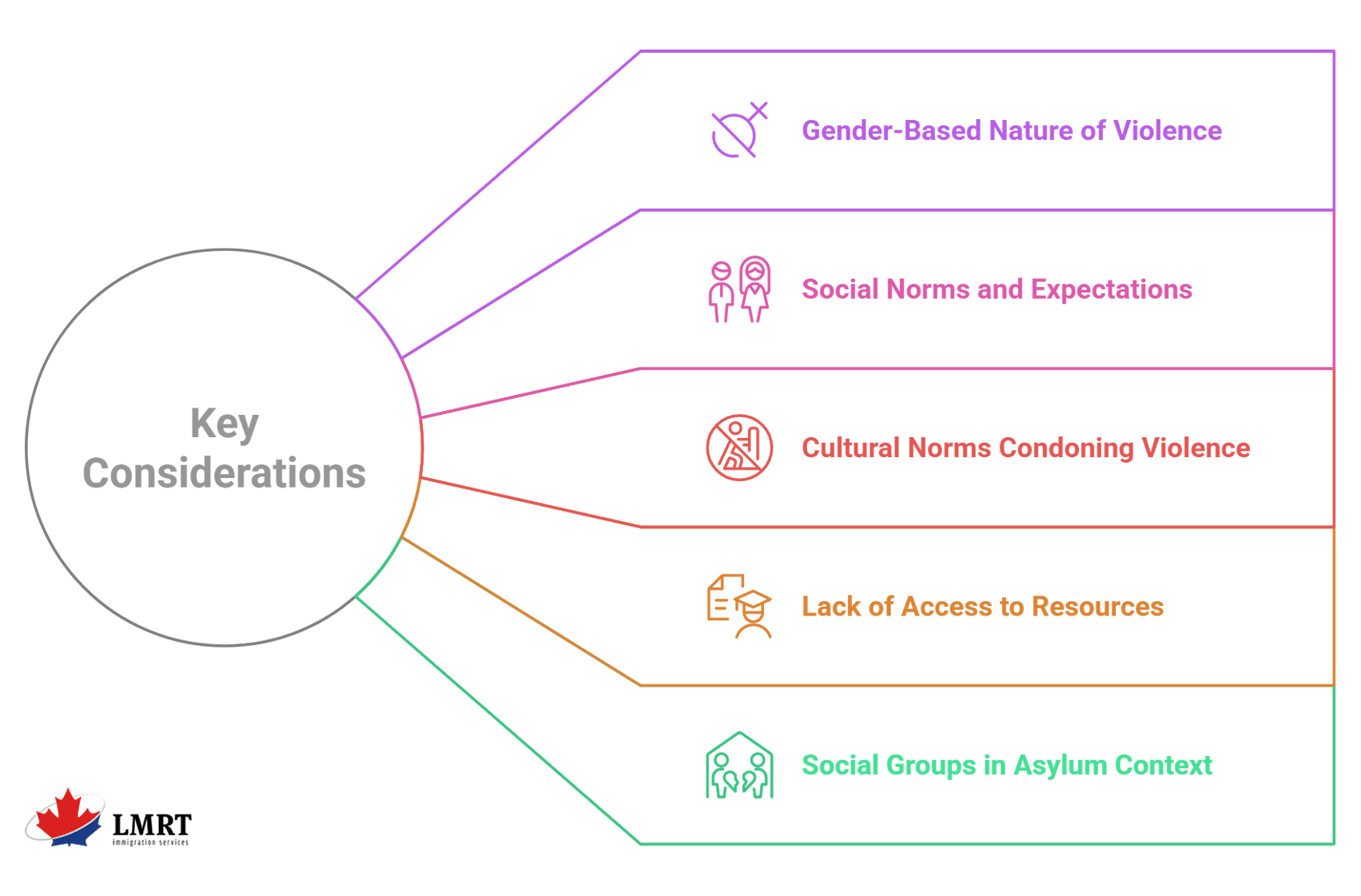
- Gender-Based Nature of Violence: Chairperson Guideline 4 emphasizes the importance of recognizing the gendered nature of violence and how social and cultural factors can increase women’s vulnerability. This includes considering factors like:
- Social norms and expectations: Traditional gender roles that may limit women’s autonomy and independence.
- Cultural norms that condone violence against women: For example, beliefs that men have the right to discipline their wives or that women are responsible for their own abuse.
- Lack of access to resources: Limited access to education, employment, and financial independence, which can make it difficult for women to escape abusive situations.
- Social Groups: In some cases, women may be considered part of a particular social group for the purposes of asylum, such as women who have been subjected to female genital mutilation or those who have defied traditional gender roles.
Seeking Asylum in Canada:
- Evidence: Gathering strong evidence is crucial. This may include:
- Medical records: Documentation of injuries, psychological trauma, and any medical treatment received.
- Police reports: Records of any reported incidents of abuse.
- Witness statements: Testimony from family, friends, neighbors, or colleagues who witnessed the abuse.
- Photographs: Pictures of injuries or other evidence of abuse.
- Court documents: Any legal orders or restraining orders issued against the abuser.
- Country information: Evidence demonstrating the severity of domestic violence and the lack of state protection in the claimant’s country of origin.
- Legal Representation: Seeking professional advice from a Regulated Canadian Immigration Consultant (RCIC) is highly recommended. RCICs can provide guidance on the asylum process, assist with gathering evidence, and represent the claimant before the Immigration and Refugee Board (IRB).

Conclusion:
Domestic violence asylum in Canada provides a crucial avenue for protection for individuals who have experienced gender-based persecution. By recognizing the unique challenges faced by victims of domestic violence, Canada demonstrates its commitment to protecting the human rights of all individuals, regardless of their gender or nationality.
Disclaimer: This information is for general knowledge and informational purposes only and does not constitute legal advice.