


Quick Answer Box (At‑a‑Glance)
What is the Refugee Protection Division (RPD)?
The Refugee Protection Division (RPD) is a division of Canada’s Immigration and Refugee Board (IRB). The RPD decides whether a person in Canada should receive refugee protection as a Convention Refugee or a Person in Need of Protection.
What does the RPD do?
- Holds refugee hearings (or, in limited cases, decides without a hearing)
- Assesses credibility, risk, and legal tests under Canadian law
- Issues decisions: accepted / refused / abandoned / withdrawn (and other procedural outcomes)
Key documents and deadlines that often decide cases:
- Basis of Claim Form (BOC): the foundation of your case (your story + key facts).
- For port‑of‑entry claims, the IRPR sets 15 days after referral, but the RPD’s current practice notice extends this to 45 calendar days after referral (most current standard as of this update).
- Evidence disclosure for a hearing: generally 10 calendar days before the hearing date (and 5 days for responding evidence), subject to the RPD’s directions and any applicable practice notices.
- Translations: documents not in English or French must have a human translation + translator declaration. Software/AI translations are not accepted by the RPD.
What happens at the RPD hearing?
A decision‑maker (“Member”) questions you about your BOC and evidence. The Member decides whether you qualify for protection. The Minister (CBSA/IRCC) may intervene in some cases.
If you’re refused:
You may have options such as Refugee Appeal Division (RAD) (if eligible) and/or Federal Court (judicial review). Deadlines can be short.
👉 Related LMRT guides:
- IRB divisions explained: https://lmrtimmigration.com/blog/immigration-and-refugee-board-of-canada-irb-complete-guide-to-all-four-divisions/
- What happens at an IRB refugee hearing: https://lmrtimmigration.com/blog/hearing-at-the-immigration-and-refugee-board/
- How to write a strong refugee narrative: https://lmrtimmigration.com/asylum-canada/the-key-to-a-strong-refugee-narrative/
- RAD appeal process: https://lmrtimmigration.com/rad-appeal-process-canada/
What the RPD is and what it is not
The correct definition (Canada)
The Refugee Protection Division (RPD) is a tribunal division of the Immigration and Refugee Board of Canada (IRB). The RPD hears and decides refugee protection claims made in Canada.
Common confusion: “RPD is part of UNHCR” (False)
The RPD is not a UNHCR division. UNHCR is a United Nations agency that works internationally on refugee protection. In Canada, the IRB‑RPD is the body that decides refugee claims under Canadian law.
If you are a claimant, this distinction matters because:
- the legal test is applied under Canadian law (IRPA/IRPR and IRB rules), and
- the decision is made by an IRB Member at the RPD, not by UNHCR.
What the RPD decides
The RPD’s job is to decide whether you qualify as either:
1) Convention Refugee
In plain language, a Convention Refugee is a person outside their country who has a well‑founded fear of persecution for a Convention ground (commonly: race, religion, nationality, political opinion, or membership in a particular social group).
2) Person in Need of Protection
In plain language, a Person in Need of Protection is a person in Canada who would face personalized danger such as torture, risk to life, or cruel and unusual treatment or punishment if returned.
What the RPD actually evaluates (what Members focus on)
Even when your case is genuine, most hearings turn on a few core decision points:
- Identity: Who are you? What documents do you have? If you do not have documents, what is the explanation?
- Credibility: Is your story consistent across the BOC, forms, and testimony? Are omissions explained?
- Nexus / grounds: For Convention claims, is the harm connected to a Convention ground?
- State protection: Could you reasonably get protection from your country’s authorities?
- Internal Flight Alternative (IFA): Could you safely and reasonably live in another part of your country?
- Exclusion / integrity issues: Serious criminality, war crimes, 1F issues, misrepresentation, etc.
How a refugee claim reaches the RPD
Step 1: Eligibility screening (CBSA / IRCC)
Before the RPD decides your claim, an officer from CBSA (at a port of entry) or IRCC (inland) determines whether your claim is eligible to be referred to the IRB.
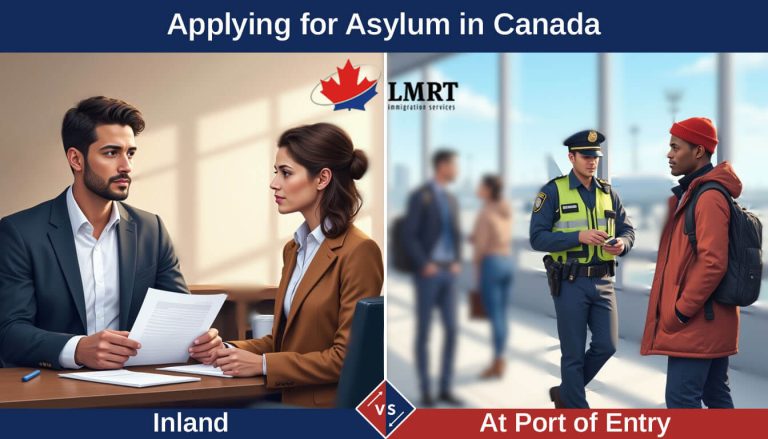
Two common pathways
A) Port of entry claims (airport / land border / seaport)
- You tell CBSA you want to claim refugee protection.
- If eligible, the claim is referred to the RPD.
- You receive instructions about the next steps, including submitting your BOC and supporting documents.
B) Inland claims (already in Canada)
- You usually start the process using the IRCC portal (online refugee claim).
- If IRCC finds you eligible to make a claim, the file is referred to the RPD for a decision.
Important: Eligibility (referred or not) is not the same as acceptance. The RPD decides acceptance.
The Basis of Claim Form (BOC): the document that makes or breaks cases
If you take only one thing seriously, make it this: the BOC is the backbone of your case.
What the BOC is
The Basis of Claim (BOC) form is where you present:
- your identity and background
- your travel history
- the key events of harm and fear
- why you cannot return
- what protection you tried (or could not try) at home
At the hearing, the Member will often ask questions using your BOC as the roadmap. They can ask about what you wrote and what you did not write.
Deadlines: what is true right now
Deadlines depend on how the claim was made and current practice notices.
Port of entry claims (CBSA referral to RPD)
- The Regulations set a 15‑day time limit after referral, but the RPD’s current practice notice extends the time limit to 45 calendar days after referral (as of the latest practice notice in force).
- If you need more time beyond that, you must apply using the RPD extension form and provide reasons.
Inland claims (IRCC portal)
- You provide your BOC and documents through the portal as part of the online process.
- The portal has its own “incomplete application” consequences if you do not submit within the allowed period.
What happens if you miss the BOC deadline
Missing the BOC deadline can trigger a special proceeding called an abandonment hearing. If the RPD finds your claim abandoned, the claim may not be heard and you can lose the chance to pursue that claim.
A practical standard we use at LMRT
We treat the BOC like a legal “foundation document”:
- chronological and readable (dates, locations, names)
- consistent with documents (passport stamps, police reports, medical records)
- honest about uncertainty (if you don’t remember a date, say you don’t)
- no “perfect storytelling”: credibility matters more than drama
👉 For writing help: https://lmrtimmigration.com/asylum-canada/the-key-to-a-strong-refugee-narrative/
Evidence rules that matter in real life
RPD cases are won or lost on evidence + consistency. This doesn’t mean you need 500 pages. It means you need the right evidence, explained properly.
1) Identity and travel documents
If you have identity/travel documents, provide them. If you do not, explain:
- what happened to them
- when and where they were lost/confiscated
- what you did to try to replace them (if possible)
2) Personal evidence
Examples:
- police reports, court documents, arrest warrants
- threatening messages, screenshots, call logs
- medical records (injuries, treatment)
- employment records, membership cards
- affidavits/letters from witnesses (with contact details where safe)
3) Country conditions evidence
Country conditions help the Member understand context (patterns of harm, state protection problems, etc.). The RPD may limit excessive submissions and expects that you use reliable sources and avoid duplicating what already exists in official packages.
4) Translations must be human
If a document isn’t English or French, you need:
- a human translation, and
- a translator’s declaration.
Do not submit software/AI translations. The RPD practice notice explicitly says this does not comply with the Rules.
5) Disclosure timing (do not leave this for the last week)
As a practical rule, aim to finish your disclosure well before the “10 days before hearing” window. If you disclose late, you may need a formal application and the Member may refuse to accept the document.
What happens at an RPD hearing
An RPD hearing is a formal, recorded legal proceeding.
Who is usually there
- RPD Member (decision‑maker)
- you (the claimant)
- counsel (lawyer or RCIC‑IRB, if you have one)
- interpreter (if needed)
- sometimes Minister’s counsel (CBSA/IRCC), if the Minister intervenes
How the hearing usually unfolds
- Confirm identities, language, interpreter needs
- The Member explains the process and confirms your documents
- Questions about your BOC, key events, fear, and evidence
- Clarifying questions on inconsistencies or missing details
- Submissions (arguments) from counsel and/or Minister’s counsel
- Decision may be delivered later in writing (most common)
What Members are really trying to decide
Members are not looking for “perfect memory.” They are looking for:
- a credible timeline
- truthful answers
- explanations that make sense
- evidence that supports the story
- a legal fit for the protection definition
👉 Hearing preparation guide: https://lmrtimmigration.com/blog/hearing-at-the-immigration-and-refugee-board/
Possible outcomes and what they mean
1) Accepted (positive decision)
If accepted, you become a protected person. This can open the door to:
- applying for permanent residence
- getting work authorization and other services (depending on status and documentation)
- starting family reunification steps in some situations
2) Refused (negative decision)
If refused, options depend on your case. Common pathways can include:
- RAD appeal (if you have the right to appeal)
- Federal Court (leave + judicial review)
- other options may exist depending on your status and timing (case‑specific)
👉 RAD appeal overview: https://lmrtimmigration.com/rad-appeal-process-canada/
3) Abandoned / withdrawn
Abandonment usually follows missed deadlines or failure to attend. Withdrawal is when you formally end your own claim. Both have serious consequences and should be handled carefully.
After an accepted decision: protected person next steps
Once you win at the RPD, many people believe “everything is done.” In reality, the next stage requires planning.
Typical next steps include:
- organizing identity documents and civil status documents
- preparing a clean, consistent PR application pathway for protected persons
- understanding travel risks and what documents you may need
- long‑term risk management (for example, avoiding actions that can trigger cessation or credibility issues later)
This is where good planning protects your future case.
Common mistakes that damage credibility
These are frequent credibility problems we see across refused files:
- BOC and testimony don’t match (dates, sequence, who did what)
- Omissions without explanation (big events missing from BOC)
- Over‑polished narrative that sounds “written for a court,” not lived
- Late disclosure without a clear reason
- Submitting translations done by software/AI
- Using generic country evidence that doesn’t connect to your specific circumstances
- Not preparing for state protection / IFA questions
- Underestimating integrity issues (misrepresentation, criminality, identity concerns)
How LMRT helps (practical, trauma‑informed preparation)
At LMRT, we focus on the parts of the process that usually decide outcomes:
- BOC + narrative development (clear, chronological, consistent)
- Evidence mapping (what you have, what you can obtain safely, what matters most)
- Hearing preparation (question rehearsals, credibility risk review, “Member lens” strategy)
- Legal framing (Convention grounds, state protection, IFA, exclusion risks)
- Procedural support (deadlines, extensions, disclosure strategy)
Contact LMRT Immigration Services (Montreal)
- Phone: +1 438 700 6165
- WhatsApp: +1 438 889 6165
- Email: agent@lmrtimmigration.com
- Office: 433 Rue Chabanel O, Office 620, Montreal, QC H2N 2J9, Canada
- Book online: https://lmrtimmigration.com/ (use “Book a Consultation”)
FAQ
Is the Refugee Protection Division part of the UNHCR?
No. In Canada, the RPD is a division of the IRB. UNHCR is a UN agency and does not decide IRB refugee claims.
What is the difference between IRCC/CBSA and the RPD?
IRCC/CBSA decide whether a claim is eligible to be referred. The RPD decides whether the claim is accepted or refused.
What is the BOC form?
The Basis of Claim (BOC) form is the core document where you explain why you need refugee protection in Canada.
How many days do I have to submit my BOC?
For port‑of‑entry claims, the Regulations set 15 days after referral, but the RPD’s current practice notice extends it to 45 calendar days after referral. Inland claims are generally filed through the IRCC portal process.
What happens if I miss the BOC deadline?
You may be scheduled for an abandonment hearing. If the RPD finds the claim abandoned, your claim may not be heard and you may lose important options.
Does the RPD accept documents translated by Google Translate or AI?
No. The RPD expects human translations with a translator declaration.
Will I definitely have a hearing?
Most cases are decided after a hearing, but there are limited situations where the RPD may decide without a hearing or deal with a case through special procedures.
Can the Minister participate in my refugee claim?
Yes. The Minister (through CBSA/IRCC counsel) may intervene in some claims, especially where there are integrity, admissibility, identity, or exclusion issues.
If I’m refused, can I appeal?
Some claimants can appeal to the Refugee Appeal Division (RAD). Others may need to consider Federal Court judicial review. Eligibility depends on the specific circumstances.
How long does the RPD process take?
Timelines vary depending on volumes and scheduling. The best approach is to prepare early, meet deadlines, and be ready when the Notice to Appear is issued.
Official sources
Use these to verify current rules, deadlines, and practice notices:
- IRB – Applying for refugee protection (steps):
- https://irb-cisr.gc.ca/en/applying-refugee-protection/Pages/index.aspx
- IRB – Step 1 (make your claim) and BOC timing:
- https://irb-cisr.gc.ca/en/applying-refugee-protection/Pages/crp-step-1.aspx
- IRB – Step 2 (send your BOC form):
- https://irb-cisr.gc.ca/en/applying-refugee-protection/Pages/crp-step-2.aspx
- IRB – RPD practice notice on procedural issues (includes 45‑day extension and disclosure rules):
- https://irb-cisr.gc.ca/en/legal-policy/procedures/Pages/rpd-pn-procedural-issues.aspx
- Refugee Protection Division Rules (SOR/2012‑256):
- https://laws-lois.justice.gc.ca/eng/regulations/SOR-2012-256/
- Canada.ca – Information for refugee claimants (overview + references to current practice notices):
- https://www.canada.ca/en/immigration-refugees-citizenship/corporate/publications-manuals/information-refugee-claimants.html
Disclaimer: This guide is general information, not legal advice. Deadlines and procedures can change. If you have an urgent deadline or removal risk, get professional advice as soon as possible.